
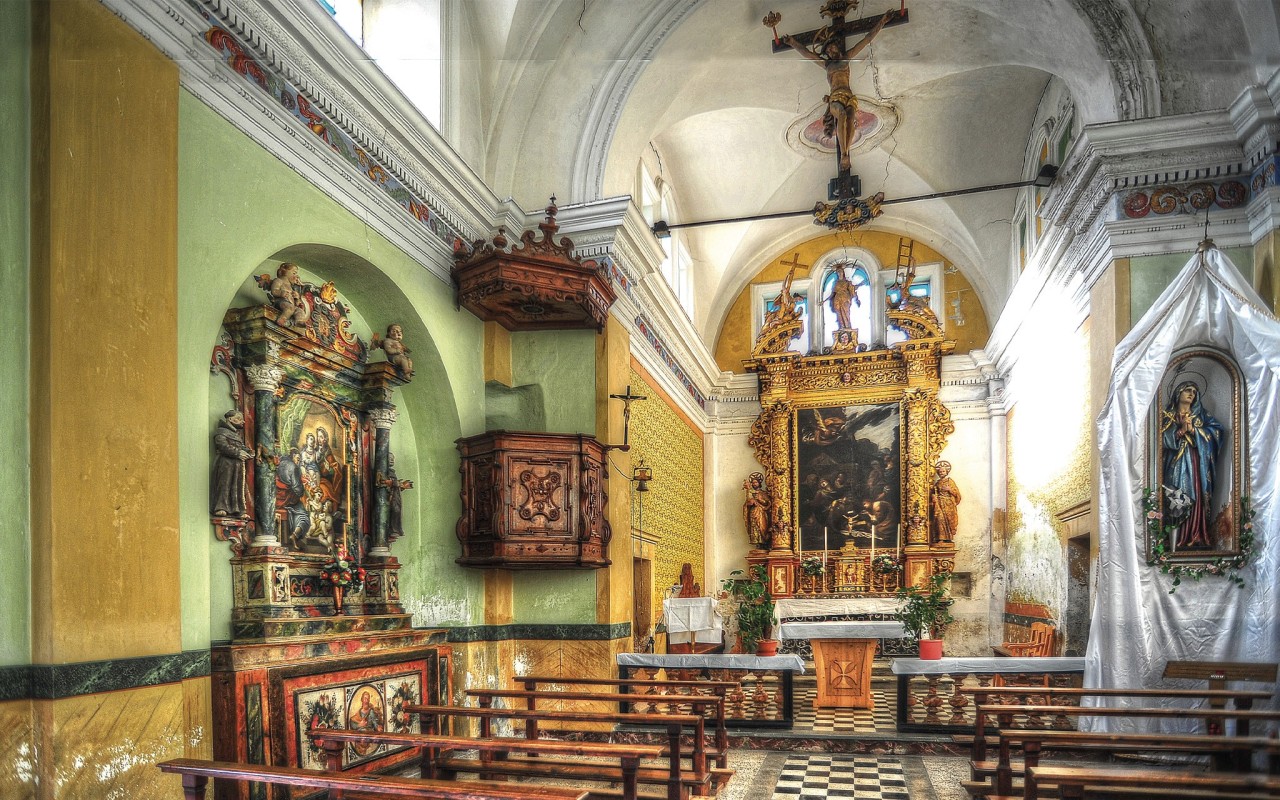

The little church of the Madonna of Pity (Madonna della Pietà), built in 1674 out of devotion to Our Lady of Seven Sorrows, was enriched over the decades by various works of art, including a vital altarpiece attributed to G. Maria Donati, also arousing curiosity due to the mysteries surrounding its history.-- INTRO--The pretty little church of the Madonna della Pietà (also known as the Church of the Beata Vergine Addolorata) was erected in the locality formerly known as 'Croce di Torripiano,' next to the ancient road that connected Bormio to the heart of Europe via the San Giacomo di Fraele pass.
The reasons behind its construction are not entirely clear. According to an oral tradition, the faithful of Premadio, Molina, and Turripiano erected it following the plague of 1636, fulfilling a vow made during that difficult period.
The historian Ignazio Bardea reports that the archpriest of Bormio, Don Cristoforo Pezzedi, a native of Turripiano, played a significant role in its realization. Although he was not directly its promoter, he contributed a benefit.
According to the account presented to the bishop in 1962 by parish priest Don Pietro Viviani, the church was 'ordered by the quondam molto illustre et reverendo Padre Paulo Sfrondato, Jesuit missionary.'
Construction began in 1674, on the initiative of Father Sfrondato, and lasted for about sixty years due to the numerous and important changes made to the parish's churches towards the end of the 17th century in accordance with the new directives concerning sacred buildings.
Premadio's bell tower was erected in 1690, while the church façade was completed in 1702 and decorated by the painters Giovanni Noale and son. In 1733, the elegant bell tower was finished and embellished with friezes by Gervasio Mino.
The interior, including the vault frescoes by the Noale family, underwent restoration in the first decades of the 19th century. During this work, the stone flooring from 1708, made by master stonemason Giuseppe Pruner, was replaced with grit tiles.
The altarpiece adorning the high altar, completed in 1706 by the carver G. Maria Donati, is considered the church's most valuable work of art. However, its location is a mystery, as it does not appear to have been initially intended for the Church of Our Lady of Sorrows.
Other works of art include two altarpieces on the side altars dedicated to St. Anne and St. Peter and paintings depicting biblical scenes, such as the Lamentation over the Body of Christ.
In addition, on the outer south wall, protected by the sacristy, is a famous painting depicting Barbara Sgritta, who tragically fell from the scaffolding in 1702 while carrying mortar for the masons.
The beautiful stoup, dated 1694 and engraved with the letters B.G.F., completes the church's furnishings.
The church is only open and accessible to the public during religious celebrations.
Are you interested in more information?
 Info & commuications
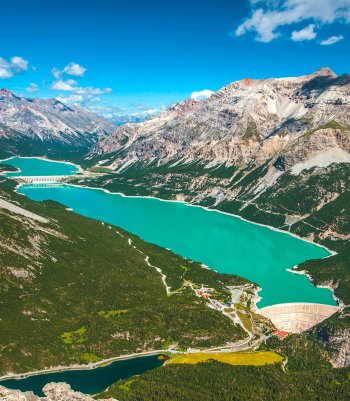
Mountain roads, as agro-sylvo-pastoral roads, are subject to specific regulations governing how they can be accessed.
 Info & commuications
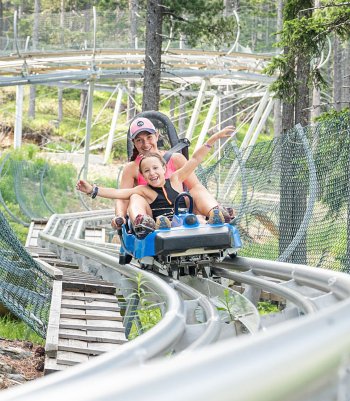
From 4 July, a summer of fun and adventure kicks off with the summer reopening of the Cima Piazzi Happy Mountain gondola lift and the Family Bob!
 Info & commuications
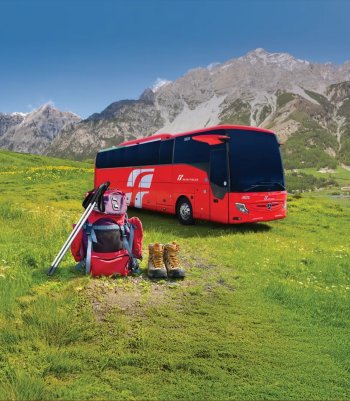
From 11 June, the Livigno Link service – the Busitalia bus service connecting Milan with Bormio, Valdidentro and Livigno – is back
 Info & commuications
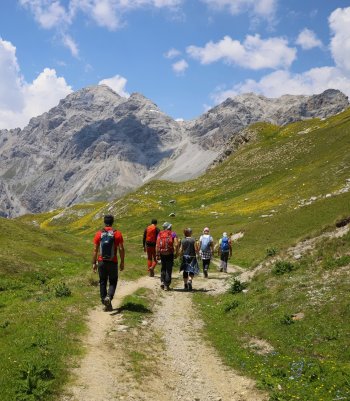
Valdidentro offers a wide range of guided walks and hikes with Guide Bormio: nature, panoramic views, alpine lakes, history and activities to help you explore the area step by step
 Info & commuications
A service dedicated to residents, tourists, and young people to get around safely, without relying on a car
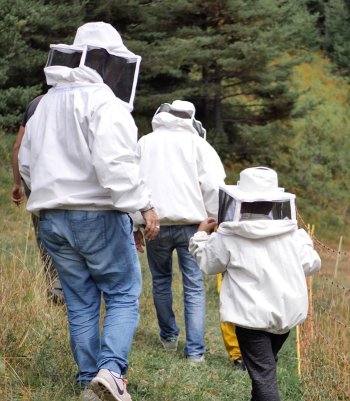
An opportunity to discover the invaluable work of bees, and a chance to rediscover the natural beauty of Valdidentro!
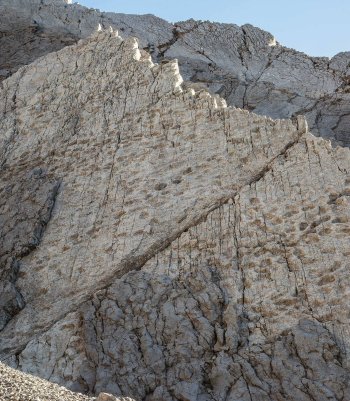
A hike through the wild landscape of the Cime di Plator, offering stunning views of the Cancano Lakes. A route that takes you on a journey to discover extraordinary dinosaur footprints
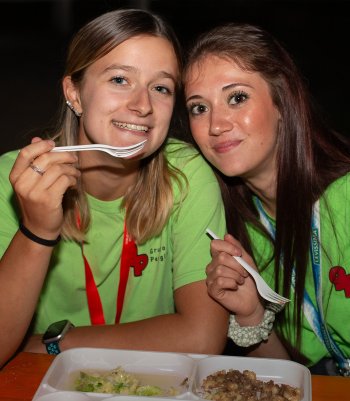
The traditional Premadio village festival: music, typical food and entertainment for everyone.
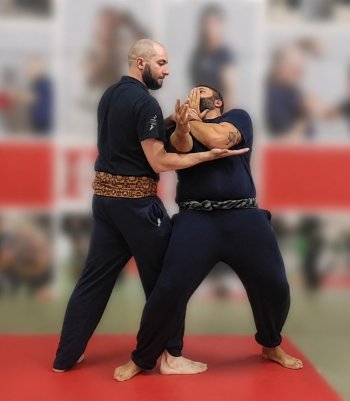
The ancient martial art of Silat comes to Valdidentro: a morning workshop to get to know your body and foster both physical and inner growth
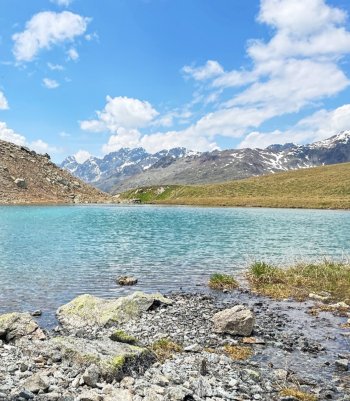
A circular hike to Lake Selva, a small alpine lake nestled amongst pastures, woods and gentle scree slopes, offering splendid views of the Val Viola and the surrounding peaks


 Book a camp


